Egg Payload Holder
A four egg holder for the Terps Rockets FAR-OUT 2026-27 payload, in two iterations that trade material for mass. Same envelope, 55% less material in the lightweight version.
- Drawing no.
- MA-003
- Rev
- B
- Status
- In progress
- Started
- Oct 2026
- Context
- Terps Rockets
- Discipline
- Aerospace, Mechanical Design, 3D Printing
- Tools
- SolidWorks, FDM 3D printing
- Envelope
- 120.6 × 63.5 × 120.7 mm (both versions)
- Capacity
- 4 eggs
Revision history
- A2026-11-24Lightweight version. Solid outer wall replaced with two rings joined by vertical struts.
- B2026-11-24Full version. Solid wall all the way around, to compare sturdiness.
The goal
FAR-OUT 2026-27 awards payload points for eggs that are launched and returned unbroken: 10 points per egg, up to 500 points.
Rules the design has to meet
- Independent of any critical part of the rocket’s structure
- At least 1 kg
- Rigidly secured
- Hits the ground at 25 ft/s or less
- No animals
- Eggs are marked by competition staff
Work so far
Modified the existing egg holder CAD and 3D printed a PLA prototype. Print settings were tuned for strength and fit: 3 perimeters, 20% cubic infill.
Two iterations
Both versions hold four eggs in the same plate with four circular cutouts, and both fit the same 120.6 × 63.5 × 120.7 mm envelope. The difference is the outer wall.
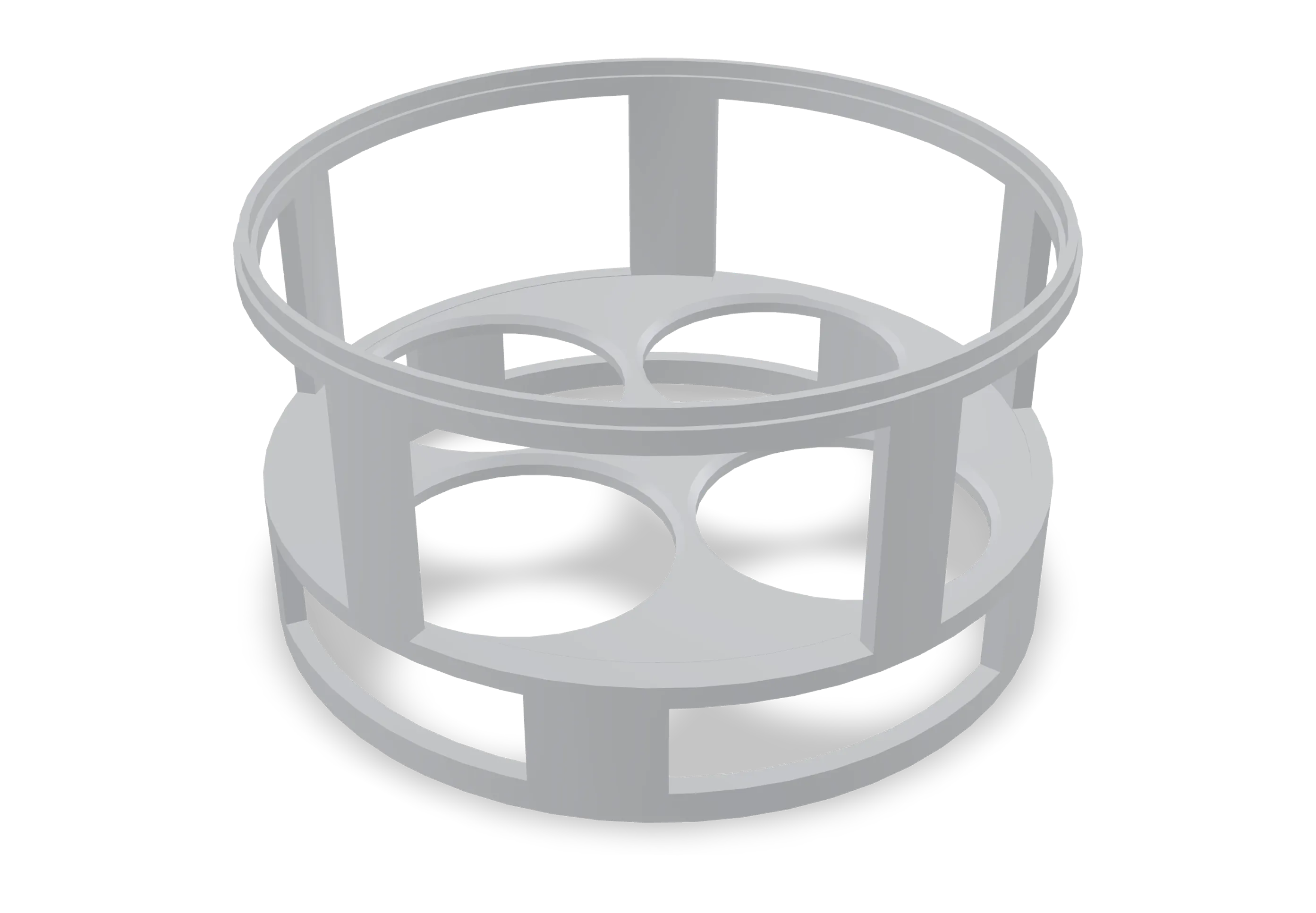
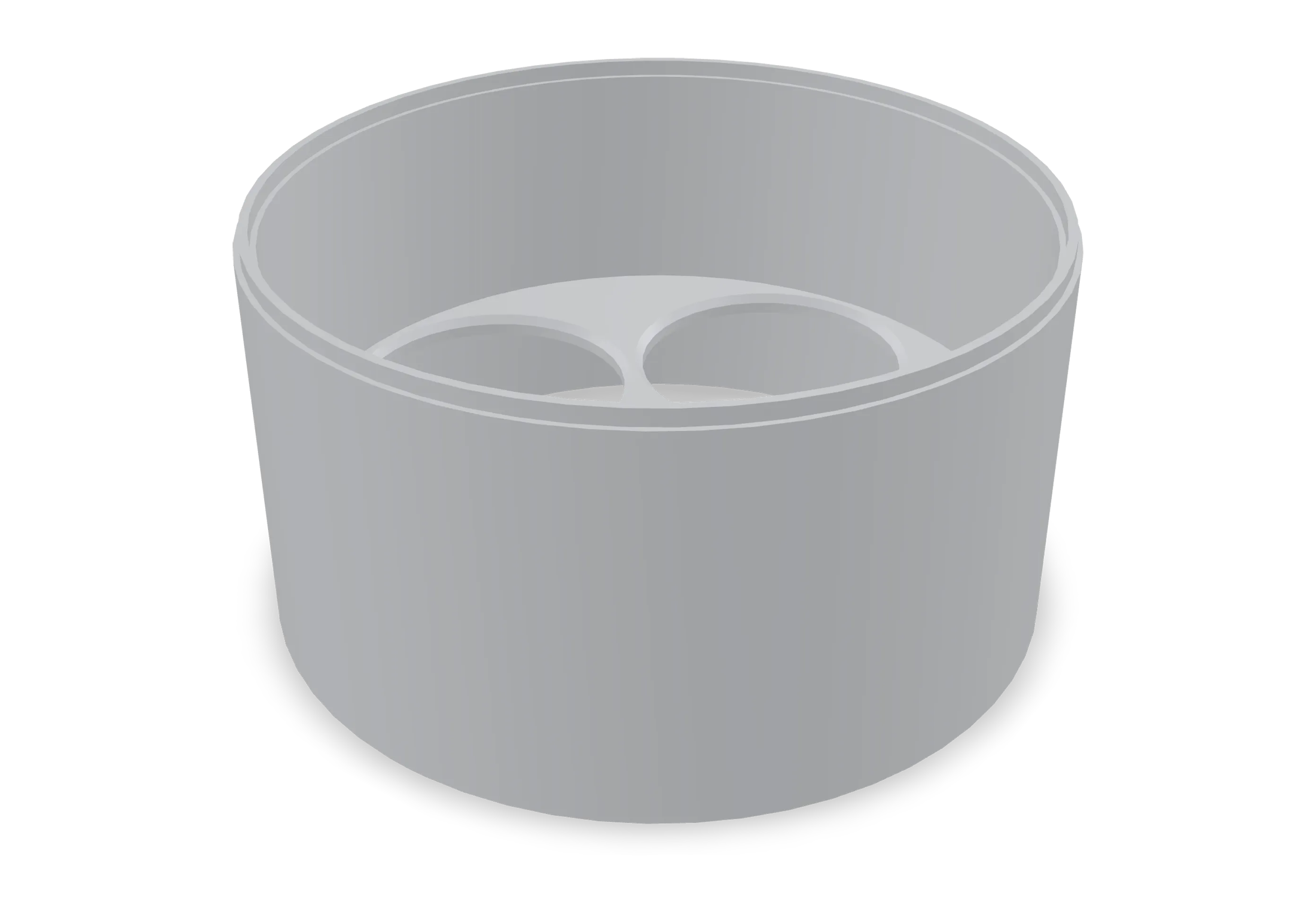
| Lightweight (Rev A) | Full (Rev B) | |
|---|---|---|
| Outer wall | Two rings joined by vertical struts | Solid cylinder |
| Material volume | 38.5 cm³ | 85.0 cm³ |
| Mass if printed solid in PLA | 47.8 g | 105.4 g |
Volumes are measured from the STL exports. Solid PLA mass uses a density of 1.24 g/cm³ and is an upper bound, since the parts print with partial infill.
The lightweight version uses 55% less material. The question the two versions answer: is the extra stiffness of a solid wall worth more than doubling the mass?
Both are rotatable in 3D at the top of this page, and in the CAD library: lightweight, full.
PLACEHOLDER: Which version you picked and why, once you have print weights or drop test results.
Design thinking
An egg breaks when force is concentrated on a small area of the shell. That makes this the opposite problem from a gripper’s serrated teeth (see the robotic arm): the holder should spread the load over as much of the shell as possible to keep the pressure low.
PLACEHOLDER: How the prototype holds each egg, what you changed from the original CAD, and test results once you have them.